Most mulch advice online is written for a national audience and assumes a single annual application timed to a spring frost that does not apply here. Florida beds — and St. Petersburg beds specifically, with our combination of heat, humidity and heavy summer rain — break mulch down meaningfully faster than that advice accounts for.
When to Mulch in Florida: The Real St. Petersburg Schedule
Twice a year works well for most beds here: once in late winter or early spring before the heavy summer rain and growth season starts, and once in early fall as the intense summer heat eases off. A single annual application, done once in spring, often leaves beds looking tired and weed-prone by late summer, which is exactly when most homeowners notice and call around.
Spring application (February–March)
This is the more important of the two applications. Fresh mulch before the growing season protects new plant growth, holds moisture through the drier spring stretch, and gets ahead of the summer weed season before it starts rather than fighting weeds that have already established.
Fall application (September–October)
By early fall, spring mulch has typically broken down and faded significantly from five months of Florida sun and rain. A fall refresh resets bed appearance heading into the more visible fall and winter months, and re-establishes the weed barrier before winter annual weeds germinate.
Why Florida mulch breaks down faster
Heat and moisture both accelerate microbial decomposition, and St. Petersburg has both in abundance for most of the year. Heavy summer rain also physically washes and compacts mulch faster than drier climates, and intense UV exposure fades color well before the material has actually finished decomposing — which is why mulch often looks tired even when it technically still has some function left.
Does the type of bed change the timing?
Beds under mature oak canopy — common throughout Old Northeast and other established St. Petersburg neighborhoods with heavy tree cover — hold moisture longer after rain, which can stretch the practical time between refreshes by a few weeks in either direction. Beds in full, unobstructed sun along the coast in Gulfport and similar waterfront areas see faster color fade from direct UV exposure and sometimes want the fall refresh a couple of weeks earlier than the September default to avoid looking tired through October.
When to Mulch in Florida: Signs Your Beds Need It Now
- Color has faded to gray or dull brown — even if the layer is still technically intact, faded mulch signals UV breakdown is well underway.
- You can see soil through the layer — coverage below 2 inches lets weed seeds germinate freely.
- Weeds are coming up faster than usual — a thinning mulch layer is the most common cause of a sudden weed increase in an otherwise maintained bed.
- The material feels spongy or soil-like when you pick it up — fully decomposed mulch has stopped functioning as a barrier and needs replacing, not just topping off.
- It has been more than six months since the last application — a reasonable default check-in point given how fast Florida conditions work.
Top-dressing vs. full replacement
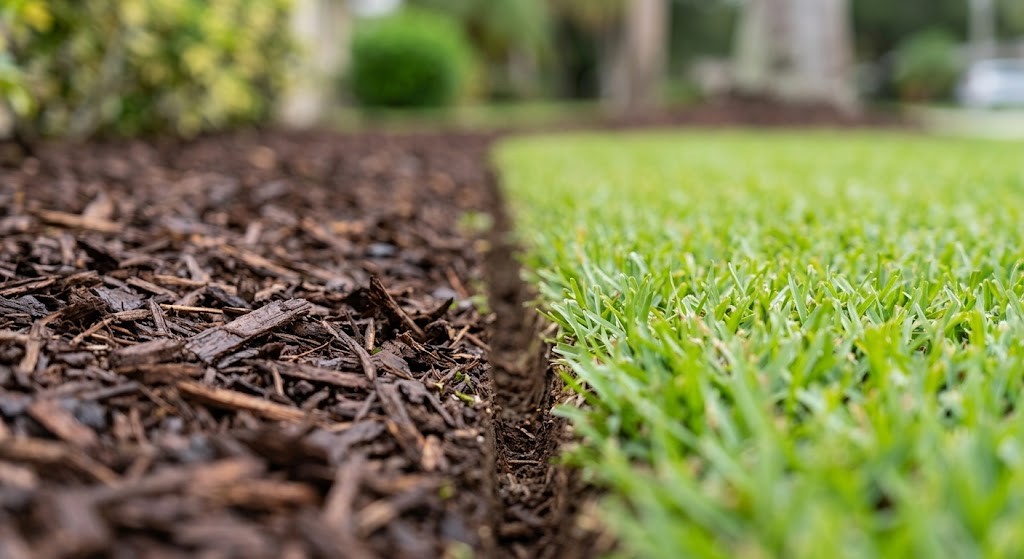
If the existing layer is still reasonably intact and just faded, top-dressing with an inch of fresh material is often enough and costs less than a full replacement. If the old mulch has broken down to a soil-like consistency, it needs to be removed first — burying decomposed mulch under a fresh layer traps moisture against plant stems and invites rot and fungus rather than solving the problem.
Should You Mulch Yourself or Hire It Out?
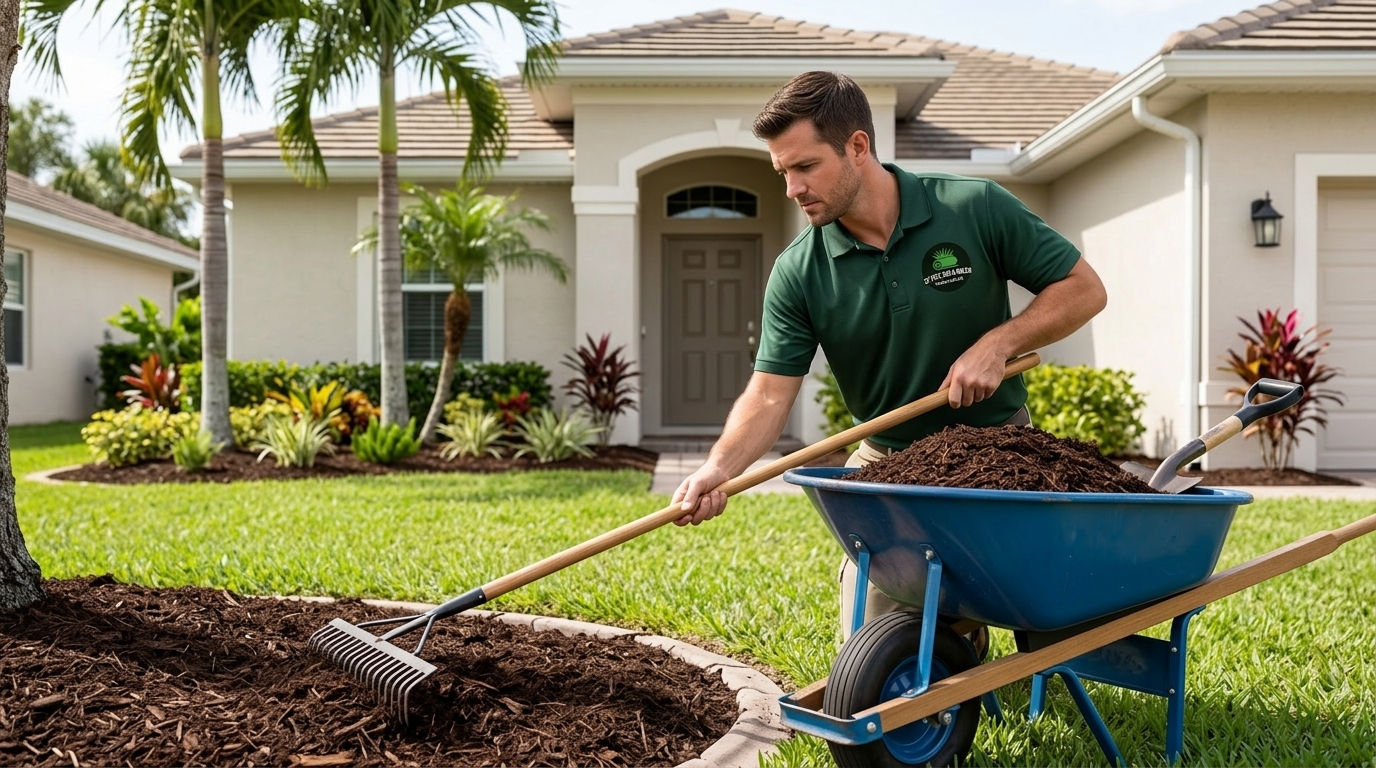
If you are comfortable spreading material yourself, mulch delivery drops bulk material in your driveway or blows it directly into beds, and you handle placement and final depth. If you would rather not spend a weekend wheelbarrowing mulch around planting beds twice a year, full mulch installation includes bed clearing, edging and correct-depth placement in a few hours. Either way, clean, well-defined bed edges make a real difference in how long a fresh application looks good — see our landscape edging page if your beds have started bleeding into the surrounding lawn.
Does mulch type change the schedule?
Somewhat. Pine bark and cypress both hold up reasonably well across a full six-month stretch, which is why the twice-a-year schedule lines up so cleanly with them. Pine straw breaks down and fades a bit faster and sometimes wants a light top-off in between full applications, especially on beds that get heavy foot traffic or direct afternoon sun. Rubber mulch is the outlier — it does not decompose at all, so once it is installed at the correct depth there is no seasonal schedule to follow, just an occasional rake-over to keep it looking tidy.
Getting the depth right
Whichever schedule you follow, depth matters more than timing. Two to three inches is the target for most beds. See our mulch depth guide for the full breakdown by bed type, and our mulch installation page for pricing on bed clearing, edging and correct-depth application.