
Mulch depth is one of those details that seems minor until you see what happens on either side of the correct range. Too thin and you have not actually solved the weed problem you installed mulch to fix. Too thick and you can genuinely damage the plants the mulch is supposed to be protecting.
Mulch Depth Guide: The General Rule Is 2 to 3 Inches
For the large majority of landscape beds, 2 to 3 inches of mulch is the target depth, measured after settling rather than immediately after a fluffy fresh application. This depth is deep enough to block sunlight from reaching weed seeds, deep enough to meaningfully hold soil moisture through dry stretches, and shallow enough that oxygen and water still reach plant roots normally.
Why thin mulch fails
Under 2 inches of coverage, enough light reaches the soil surface for weed seeds already present to germinate normally. This is the most common reason a newly mulched bed looks weedy again within a month — the layer looked adequate when it was spread but settled to under an inch within a few weeks, especially with lighter materials like pine straw.
Why thick mulch causes real problems
Beyond 4 inches, mulch starts working against the plants underneath it. A thick layer holds so much moisture that it can suffocate roots by cutting off oxygen exchange with the soil, and it creates ideal conditions for fungus and rot, particularly where it contacts stems and trunks directly. Over-mulching is a genuinely common cause of shrub and small tree decline that gets misdiagnosed as a watering or pest problem.
Mulch Depth by Situation: Beds, Tree Rings and Foundations
General landscape beds
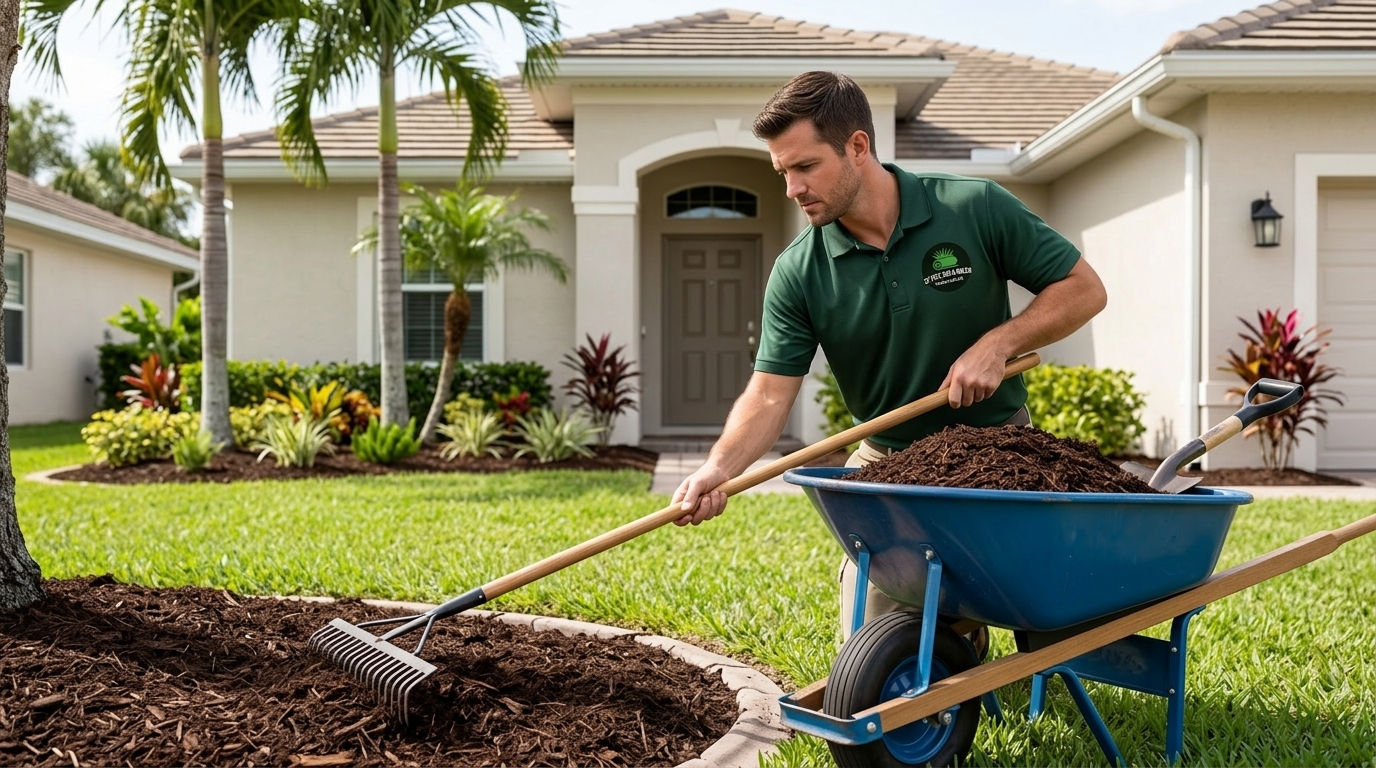
2 to 3 inches. This covers the majority of foundation plantings, shrub borders and mixed beds in a typical St. Petersburg yard.
Tree rings
2 to 3 inches, but critically, kept several inches clear of the trunk itself in a donut shape rather than piled against the bark. Mulch mounded directly against a trunk — sometimes called a mulch volcano — traps moisture against the bark, invites rot and pest access, and can eventually girdle the tree’s root flare. This is one of the single most common mulching mistakes we see, including from other landscaping companies.
Around foundations and structures
2 inches, kept a few inches clear of siding, stucco and any wood structural elements. Mulch piled against a house foundation holds moisture against materials that are not designed for constant dampness and can contribute to pest access points.
Vegetable and raised garden beds
2 to 4 inches depending on material — straw mulch in vegetable beds is often applied slightly thicker than ornamental bed mulch since it breaks down faster and serves a more purely functional moisture-retention role.
Pool decks, pavers and hardscape edges
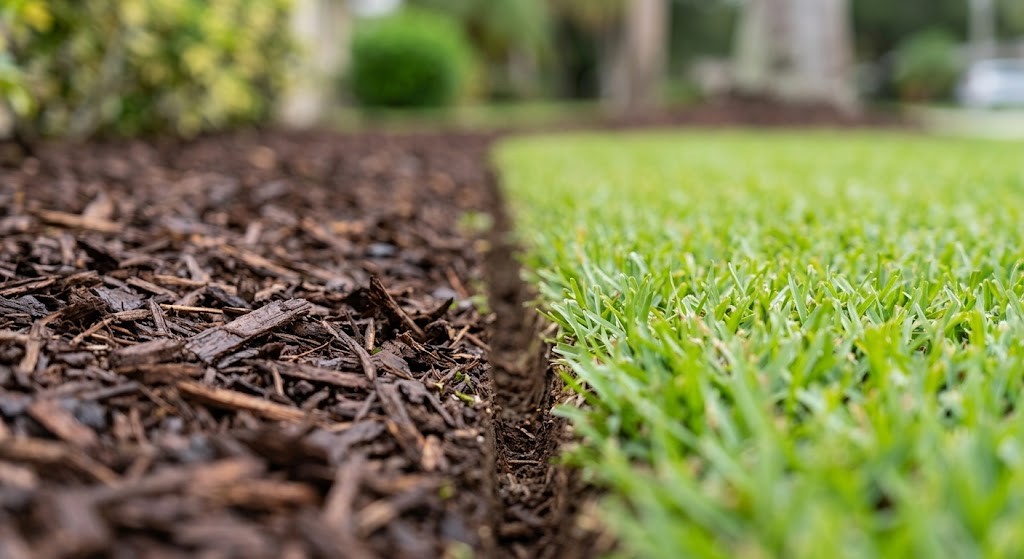
Beds that border a pool deck or paver patio need a firm, defined edge. Loose mulch washes onto pavers in heavy rain and can stain lighter-colored concrete, travertine or pool decking, and it is one of the more common cleanup complaints we hear about after a DIY mulch job. A proper landscape edging border keeps mulch contained inside the bed at the correct depth instead of migrating onto hardscape after every storm.
How to check your current depth
Push a finger or small trowel straight down through the mulch to the soil line in a few different spots in the bed — depth is rarely uniform across an entire bed, especially in beds that have been top-dressed repeatedly over time rather than fully refreshed. If you are consistently finding less than 2 inches, it is time for more material. If you are consistently finding more than 4, it is time to pull some back rather than add to it.
A note on measuring right after delivery
Freshly spread mulch always looks and measures a little deeper than it will settle to within the first few weeks, especially lighter materials like pine straw that compress noticeably once rained on and walked past a few times. If you are checking a bed right after a delivery and it reads closer to 4 inches, that is usually fine — it is heading toward the 2 to 3 inch settled target rather than sitting permanently too deep. Measure again after the first good rain if you want an accurate read on where it will actually land. Waterfront and coastal beds — along the Gulf in St. Pete Beach or the open, wind-exposed yards common in Shore Acres — tend to wash and compact faster after summer storms than more sheltered inland beds, so it is worth checking depth there a bit more often than the six-month default.
Buying Mulch by the Yard vs. by the Bag
For most beds larger than a couple hundred square feet, bulk material bought by the cubic yard through mulch delivery costs meaningfully less per square foot than bagged mulch from a hardware store, and it arrives already measured out by the yard instead of you guessing how many bags to buy and running back for more halfway through the job. Bagged mulch still makes sense for small touch-up areas or a single tree ring, where a full bulk delivery would be far more than you need.
Getting it right the first time
We measure depth as we spread rather than estimating by eye, and we always clear mulch away from trunks and stems as standard practice, not an upsell. See our mulch installation page for pricing, or our mulch timing guide for when to schedule your next refresh.