If you have priced out grass seed against sod, the seed number looks dramatically cheaper on paper. It is, and there are real reasons almost nobody in this climate uses it for a full lawn anyway. Here is the honest version of that comparison, not the sales pitch for either option.
Sod vs. Seed in Florida: The Core Trade-Off
Seed costs a fraction of sod per square foot in raw material. Sod costs more but gives you an established, weed-free lawn in a single day instead of a multi-week germination and establishment process with real risk of failure along the way. In most other parts of the country, seed is a completely reasonable choice. In Florida, the math shifts hard toward sod for reasons specific to our climate and available grass varieties.
Why seed struggles specifically in Florida
Warm-season grasses do not seed well
This is the big one. Floratam St. Augustine — the most popular lawn grass in Florida — does not produce viable seed commercially at all. It is a hybrid variety that is propagated only by sod or plugs. If you want a St. Augustine lawn, seed is not even an option regardless of budget. Zoysia seed exists but establishes extremely slowly and unevenly. Bahia is the only one of our three common varieties that seeds reasonably well.
Weed competition during establishment
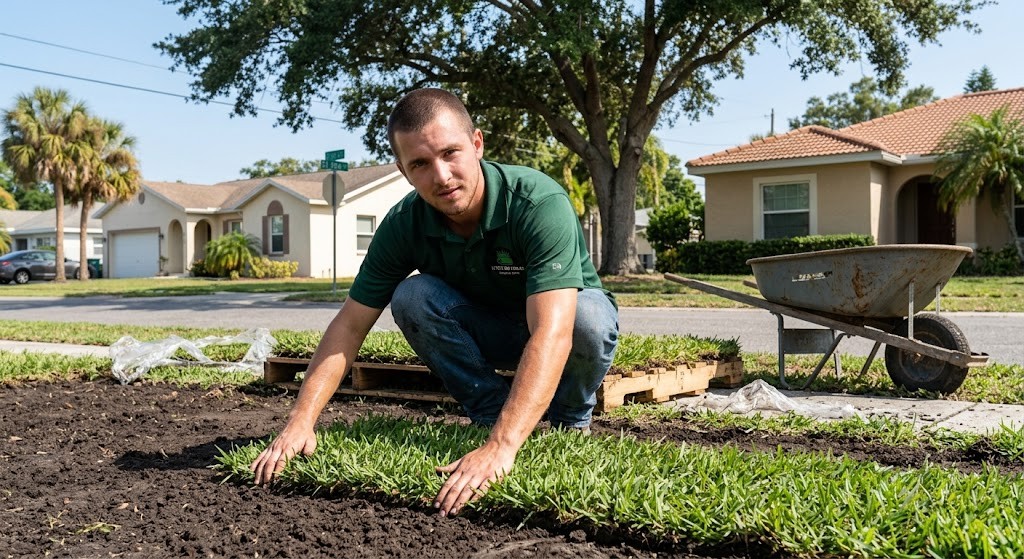
A newly seeded lawn is bare dirt for weeks, and bare dirt in Florida does not stay bare — weed seeds already in the soil germinate immediately and outcompete slow-establishing grass seedlings. Sod skips this window entirely since the turf arrives already dense enough to shade out most weed competition from day one.
Erosion and rain
Florida gets intense, heavy rain events, especially in summer. Seed and the loose topsoil it is planted in wash badly in a hard rain before roots have established, which can mean reseeding sections multiple times before a lawn actually takes. Sod, once tamped and rolled, resists erosion from the first day.
Timeline and risk
Seed takes weeks to germinate and months to establish a truly usable lawn, with real risk of partial or total failure from drought stress, washout, or bird and insect predation on the seed itself before it even germinates. Sod is walkable within a couple of weeks and essentially guaranteed to succeed as long as basic watering is followed, which is why it carries an establishment guarantee and seed realistically cannot.
What about hydroseeding or hydromulch?
Hydroseeding sprays a seed-and-mulch slurry rather than broadcasting dry seed, and it solves part of the erosion problem by holding seed in place through the first few rains better than dry seeding does. It does not solve the core issue, though — Floratam still cannot be hydroseeded because it does not produce viable seed at all, and Zoysia hydroseed still establishes slowly and unevenly compared to sod. In practice, hydroseeding is mainly a Bahia tool in this climate, useful on large acreage where full sod coverage is not cost-effective.
When seed actually makes sense
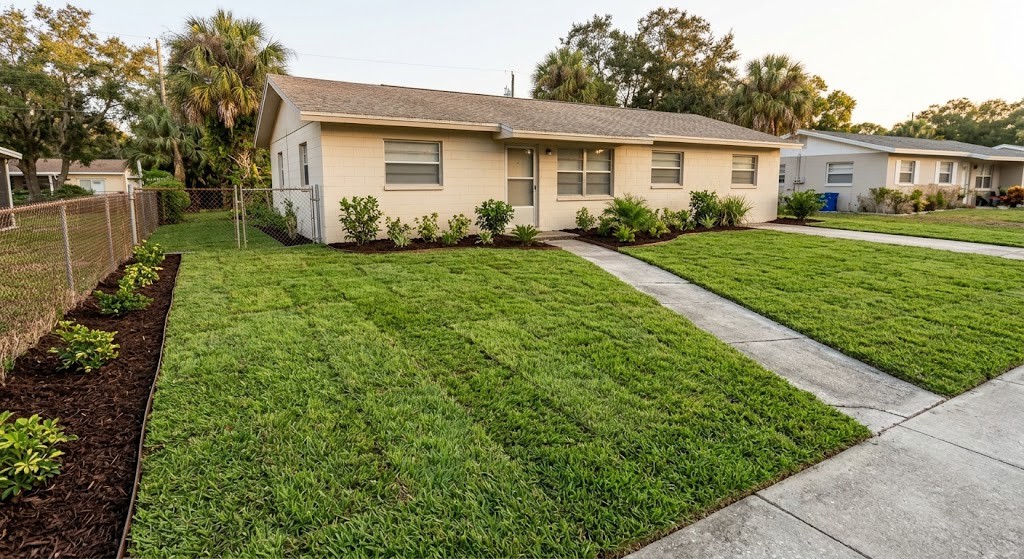
Seed is not always the wrong call. It genuinely makes sense for very large acreage properties where sod cost becomes prohibitive and a rougher, slower-establishing lawn is acceptable — pasture-style Bahia seeding for a large rural lot, for example, which comes up more often on the bigger parcels we see toward Seminole and unincorporated stretches of Pinellas Park than on standard in-town residential lots. It can also work for overseeding thin areas of an already-established Bahia lawn rather than a full installation. What it is not well suited for is a standard residential yard where you want a reliable result on a normal timeline.
The honest cost comparison
Seed material costs roughly 10 to 20 percent of sod material cost per square foot. But once you factor in the higher failure and reseeding rate, the extended timeline where the yard is unusable, and the weed control needed during establishment, the effective cost gap narrows considerably — and that is before accounting for the multiple months most homeowners are looking at bare or patchy dirt instead of a lawn. For exact installed sod pricing by yard size and variety, see our sod installation cost breakdown.
Sod vs. Seed Florida: What About Bed Prep Either Way?
Regardless of which route you choose, bare soil needs to be properly graded and cleared of existing weeds first, or whichever method you use will struggle for the same underlying reason — poor drainage and weed competition do not care whether the grass on top started as sod or seed. See our bed prep and leveling page for what that involves before either one goes down.
Sod vs. Seed Florida: Our Honest Recommendation
For a standard St. Petersburg residential yard, sod is the right call in nearly every situation, and it is not close. See our sod installation page for pricing, or sod delivery if you want to install it yourself.